
"Tanzanian coffee growing"
600 article(s) found

What's the taste of Tanzanian coffee? Kilimanjaro coffee? is it good?
Professional coffee knowledge exchange more coffee bean information please follow coffee workshop (Wechat official account cafe_style) Tanzania is a country with a rich coffee history and a vast coffee growing area, the main producing areas are Mount Kilimanjaro and Mount Meru, they are two volcanoes with very fertile soil, coffee system and flavor are similar to Kenya, and coffee is the main economy of the country.

Tanzania coffee beans taste, aroma and vision
Tanzania AA Tanzania AA coffee beans are smaller and more round than most coffee beans. They look like peas. Tanzanian coffee beans have different qualities, such as Kilimanjaro coffee. It exudes delicate fragrance, with aromas of wine and fruit, which makes people taste endless aftertaste. It is very similar to Kenyan coffee in appearance, but more comprehensive in taste.

Description of Taste and Flavor of Kilimanjaro Coffee beans introduction to Fine Manor of Grinding scale
Coffee beans in Tanzania have extraordinary quality. Most coffee is grown on small-scale farms and the coffee produced is mainly for export. Although the aroma of coffee is not much different from that of Kenya, a neighboring coffee producer, the production technology or raw bean processing equipment lags far behind Kenya. Tan is produced near the Kilimanjaro Mountains, with an elevation of 1800 meters above sea level.

A brief introduction to the market price of pure, straightforward and enthusiastic high-quality coffee beans in Tanzania
Drinking Tanzanian coffee, especially the small round bean peaberry, is always impressive. Coffee is like the simple, frank and enthusiastic national character of Tanzania. Its refreshing acidity and medium mellowness complement sweet citrus and floral aromas. This coffee tastes great whether it's a hot drink or iced coffee. With oranges or berries, it can show its bright flavor. you

Tanzania Coffee Flavor description, Grinding degree treatment, Price introduction of Fine Coffee beans
Coffee growing areas in Tanzania, Africa, coffee is produced in the soil-rich East African Rift Valley and is an outstanding representative of high-quality coffee from this region. Its refreshing acidity and medium mellowness complement sweet citrus and floral aromas. This coffee tastes great whether it's a hot drink or iced coffee. Paired with oranges or berries, it highlights the bright flavor of Mount Kiliman.

Description of the characteristics and Flavor of Tanzania Coffee beans introduction to the producing areas of manor varieties
The characteristics and flavor of Tanzanian coffee beans describe the taste of manor varieties introduce the origin of coffee in Tanzania: coffee bean-shaped berry coffee in Tanzania produces a lot of coffee and is said to be more fragrant than ordinary coffee. Generally speaking, coffee beans in Tanzania have extraordinary quality. For example, in the Moshi area near Mount Kilimanjaro.

Introduction of Tanzania Coffee Flavor description Grinding scale treatment Variety characteristics Manor
Kilimanjaro pearl beans, washed with water, have a soft acidity like Kenyan coffee, a pleasingly low acidity, a round taste and a medium consistency. Although the texture of high-quality Tanzanian beans is similar to that of Kenyan coffee, the overall quality is similar to that of Kenyan coffee. In addition to the lingering finish, the fruity aroma is similar to that of the

What is the difference between Tanzania AAA and AA what does Tanzania AAA mean? Tanzanian coffee
Professional coffee knowledge exchange more coffee bean information please follow the coffee workshop (Wechat official account cafe_style) Tanzania AAA Tanzania AAA today to talk about Tanzania AAA! Some people may wonder, now that there is a Tanzanian AA, how can there be an AAA? Doesn't the so-called AA represent the highest quality in Africa? Kenya is such as

Flavor and taste characteristics of Tanzanian coffee with pure flavor introduction of fine coffee in manor producing area
Pyrethrum: mainly planted by small farmers, the planting area is distributed in the southern highlands of Mbeya District and Iringa District. The annual output is estimated at 2500 tons. The centralized management department of the industry is the Tanganyika Bureau of exterminating Chrysanthemum. Oil crops: non-traditional crops, including industrial and oil crops, such as castor, sunflower, peanut, sesame, coconut, cottonseed and soybean. Many provinces are suitable.

Grinding scale Flavor description of Kilimanjaro Coffee beans introduction to the Manor
Tanzanian coffee is mostly washed. After picking, coffee farmers will send the coffee fruit to the nearest processing plant for processing. The treatment step of the water washing method is to screen and remove the impurities in the coffee fruit, then remove the coffee pulp and exocarp, send it into the fermentation tank, and remove the pectin layer from the inner pericarp by fermentation. Clean

Introduction to the characteristics of Kilimanjaro Coffee Flavor Manor Manor in Tanzania
Kilimanjaro Coffee (Kilikmanjaro Coffee) is produced in Mount Kilimanjaro, the highest mountain in Africa in northeastern Tanzania. Its coffee is of good quality, rich aroma and outstanding sour taste, so it is suitable for the preparation of comprehensive coffee. Kilimanjaro coffee is an important lifeline of the Tanzanian economy. About 17% of the foreign exchange is created by coffee and is mainly produced.

Light sour Tanzanian coffee flavor the characteristics of the manor introduce the northern highlands of Gillimaza
Tanzania's main coffee producing area, located at the foot of Mount Kilimanjaro, is rich in volcanic soil. Some coffee trees planted here are more than 100 years old. Coffee was first introduced by Christians from Kenya to grow coffee. Coffee trees must be carefully taken care of, weeded and fertilized. And old branches must be cut off so that new branches can grow to maintain the quality of coffee beans.

A brief introduction to the description of the flavor and flavor characteristics of Tanzania coffee, which is as famous as Blue Mountain Coffee.
Usually its acidity is relatively mild, after the entrance, it evenly stimulates the taste buds in the middle and both sides of the back of the tongue, feeling a bit like the sour taste of tomato or soda. After moderate or more moderate baking, it has a strong aroma, then grind it into a fine powder, soak it in a pot of boiling water, and invite friends to sit around and taste it. Coffee exports from Tanzania (Tanzania) are found throughout

Tanzania Coffee Flavor and taste introduction to manors in producing areas
Since 2001, the coalition government has continued to consolidate unity, maintain the coalition regime, strive for moderate forces, crack down on the separatist forces in Zanzibar, and take care of the allocation of budgetary funds and other issues related to Zanzibar's vital interests. Instead of openly advocating separation, URUF has demanded that Zanzibar be given more autonomy. In December 2005, Kikwete was elected as the United Republic

A brief introduction to the planting market price of Tanzania's boutique coffee beans with outstanding sour taste
Europeans give Tanzania a nickname for coffee gentleman, and coffee connoisseurs call it the coffee three swordsmen with the coffee king Blue Mountain and the coffee lady's mocha. Kilimanjaro Coffee (Kilikmanjaro Coffee) is produced in Mount Kilimanjaro, the highest mountain in Africa in northeastern Tanzania. Its coffee is of good quality, rich aroma and sour taste.

Description of characteristics and species of coffee beans in Tanzania A brief introduction to the producing areas of coffee beans by taste treatment
A brief introduction to the production area of Tanzania coffee beans compared with neighboring Kenya, but the quality of coffee in this country is not strictly controlled. carelessness in many processes often destroys the quality of coffee (such as transportation). High-quality Tanzanian coffee beans are divided into AA and A-grade Tanzanians still keep a lot of coffee.

Medium alcohol Tanzanian coffee Flavor Taste Manor Features Fine coffee Introduction
Tanzania's eastern coastal areas and inland parts of the lowlands belong to the savanna climate, the western inland plateau belongs to the tropical mountain climate, most of the average temperature of 21-25℃. More than 20 islands of Zanzibar have a tropical maritime climate, hot and humid all year round, with an average annual temperature of 26℃. [6]Rainfall types are divided into bimodal distribution and unimodal distribution. Areas with bi-modal rainfall include

A brief introduction to the treatment method of grind degree and baking degree of elegant and sour Tanzanian boutique coffee beans
In October 2000, Mkapa was re-elected president of the United Republic, and Karume, a candidate of the Revolutionary Party, was elected president and repeatedly expressed his position of safeguarding national unity, which further dealt a blow to the separatist forces. Since 2001, the coalition government has continued to consolidate the situation of unity, maintain the coalition regime, strive for moderate forces, crack down on the separatist forces in Zanzibar, and allocate budgetary funds and other matters related to Sang.
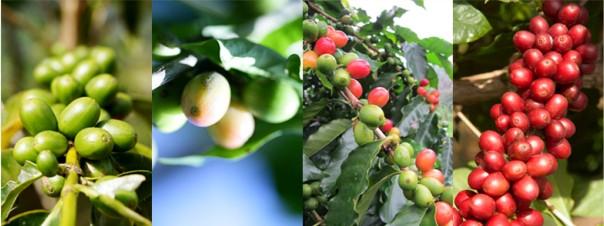
African Tanzania coffee cooked beans Kilimanjaro pearl round beans PB Gilimaza water wash bourbon
Tanzania gourmet coffee has soft acidity and attractive aroma, which is absolutely worth enjoying. Coffee exports from Tanzania (Tanzania) play an important role in the whole national economy. Bean-shaped berry coffee is very productive and is said to be more fragrant than ordinary coffee. Generally speaking, the coffee beans in Tanzania have an extraordinary quality. For example, near Kilimanjaro (

Does Tanzania produce coffee? how do Tanzanian coffee beans taste? coffee brewing advice
For more information on coffee beans, please follow the Coffee Workshop (Wechat official account cafe_style) Tanzania, also known as the United Republic of Tanzania, is located in eastern Africa, south of the equator, bordered by Kenya and Uganda in the north, Zambia, Malawi and Mozambique in the south, Rwanda, Burundi and the Democratic Republic of the Congo in the west and the Indian Ocean in the east. The 16th